How to Cook Bacon in the Oven: Grandpa's Perfect Recipe
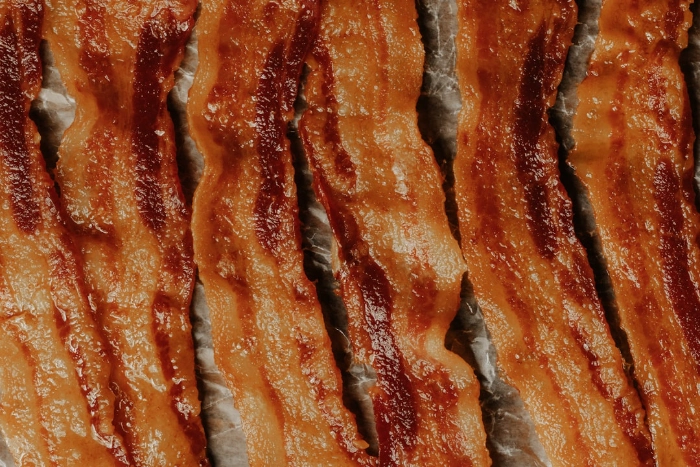
The perfect crispy bacon recipe starts with a good cut of bacon.
My favorite is Trader Joe's Thick sliced, Uncured Applewood Smoked Bacon (see pic) No sugars added. Apparently, seasoned only with celery powder. Never knew 'til now that there isn't any seasoning beyond Applewood smoke!
There's 8-10 slices of bacon in each pack in the picture above
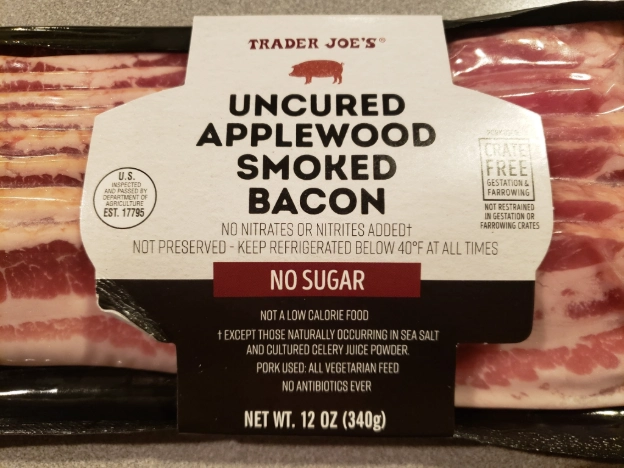
I've mistakenly bought other varieties with sugars or other seasoning added, and I didn't like them as much.
Pre-Heat the Oven to 425 and Cook Single-Layered Bacon
Next, oven cook to 425° in a double broiler pan.
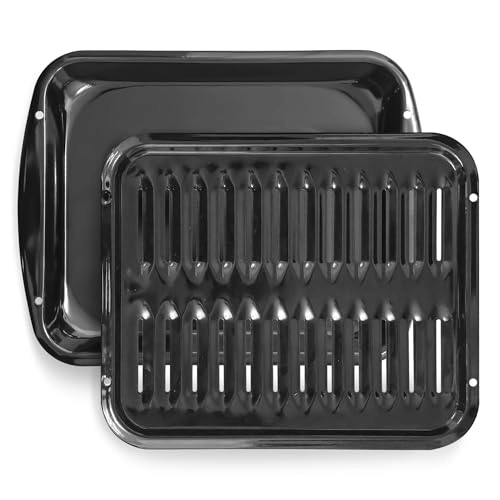
Cook bacon for 10-12 minutes, then flip over bacon strips.
Let cook and check bacon again after another 7-10 minutes, flipping again if needed for another 3 minutes.
At this point, it's more or less what looks right. Especially if you plan to eat it then. Flip and cook a little more if needed for desired crispness.
Please note: I've been transitioning from cooking a single layer of bacon to doubling and tripling up on each layer (scroll below for 'ADDENDUM'). The reason is to speed things up, since I cook 2 packs, and freeze much of it for later.
...More on that in a moment!
So, the times noted above (10-12; 7-10; 3, etc.), is my best advice for single-layer cooking. Also, times will vary depending on thickness, oven make/model, and initial bacon temperature.
Also note, at times I freeze packages before cooking. Be sure to defrost before cooking for times noted. BTW, I've never cooked frozen bacon, and do not recommend it!
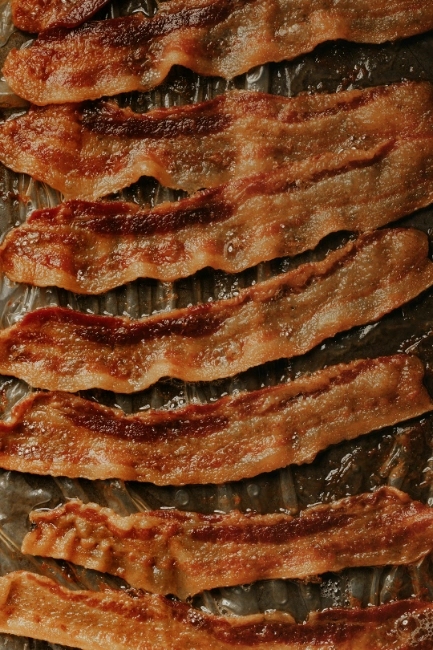
OTHER COOKING NOTES:
Each oven cooks differently, even when each is set at 425°.
For example, with my oven the bacon on the outer edge of the pan cooks quicker. So, with each flip I may rearrange the location of strips from outer and inner sides of the pan.
When cooking to store in freezer (for later snacking): I won't cook to crispness for eating in-the-moment. Instead, I will cook to allow for additional re-heating/cooking later on the stove-top.
Cooking 2 packs will double the amount of grease. Be careful! Grease sloshes around the pan, and oven mitts get more slippery with each check!
For catching accidental grease spills I place two Reynolds wrap covered cookie sheets in the oven on the shelf under the cooking bacon 🥓 😋
I hope this dissertation helps. 😜
CLEAN-UP NOTES for Bacon Cooking
After letting the pan and excess lard cool, I pour lard into a glass jar and place in the refrigerator.
To REDUCE PLUMBING problems:
I wipe the pan down pan as best as possible with napkins or paper towels, which are then thrown into garbage. Next, I first soak pan in soapy water. After soaking a while, I will wipe pan again with napkins or paper towels, I will then wash the pan.
Remove and dispose in garbage most of the lard.This saves major plumbing problems down the road!
Finally, clean and flush sink with more soapy water.
Recipe written by Kenneth R. Busse, edited by Kevin Busse.
-ADDENDUM-
Double/Triple Layers: Batch Cooking 2-3 layers of Bacon in the Oven
Back to 2-3 layer cooking...
First, 2-layers cook more consistently for each strip. 3-layers are not so consistent for each strip!
The reason is that as bacon shrinks, there'll be enough room to manage 2 layers, however, with 3 layers you'll run short on room (real-estate on the pan).
Pre-Heat the Oven to 425 and Cook Double/Triple Layered Bacon
While 2-Layer cooking speeds things up, overall cooking time is greater. (I've been doing this more frequently since Christmas).
1) Distribute double-layered bacon strips closely across pan, and cook 10-12 minutes.
2) Flip double-layered bacon together (so uncooked middles remain together), and cook for 10-12 minutes.
NOTE: when you first flip double layers the tops will look like they need lots more cooking.
3) Separate and Re-assemble 2 layers with cooked sides together, and uncooked sides facing out. Cook newly assembled 2-layered strips 5-7 minutes.
4) Flip 2-layered strips, and cook 5-7 minutes.
5) Separate double layers and distribute in single layer across pan, and cook as needed to your liking, monitoring every 3 minutes or so.
Recipe written by Kenneth R. Busse, edited by Kevin Busse.